How to Write AI Interior Design Prompts That Actually Work (2026 Guide)
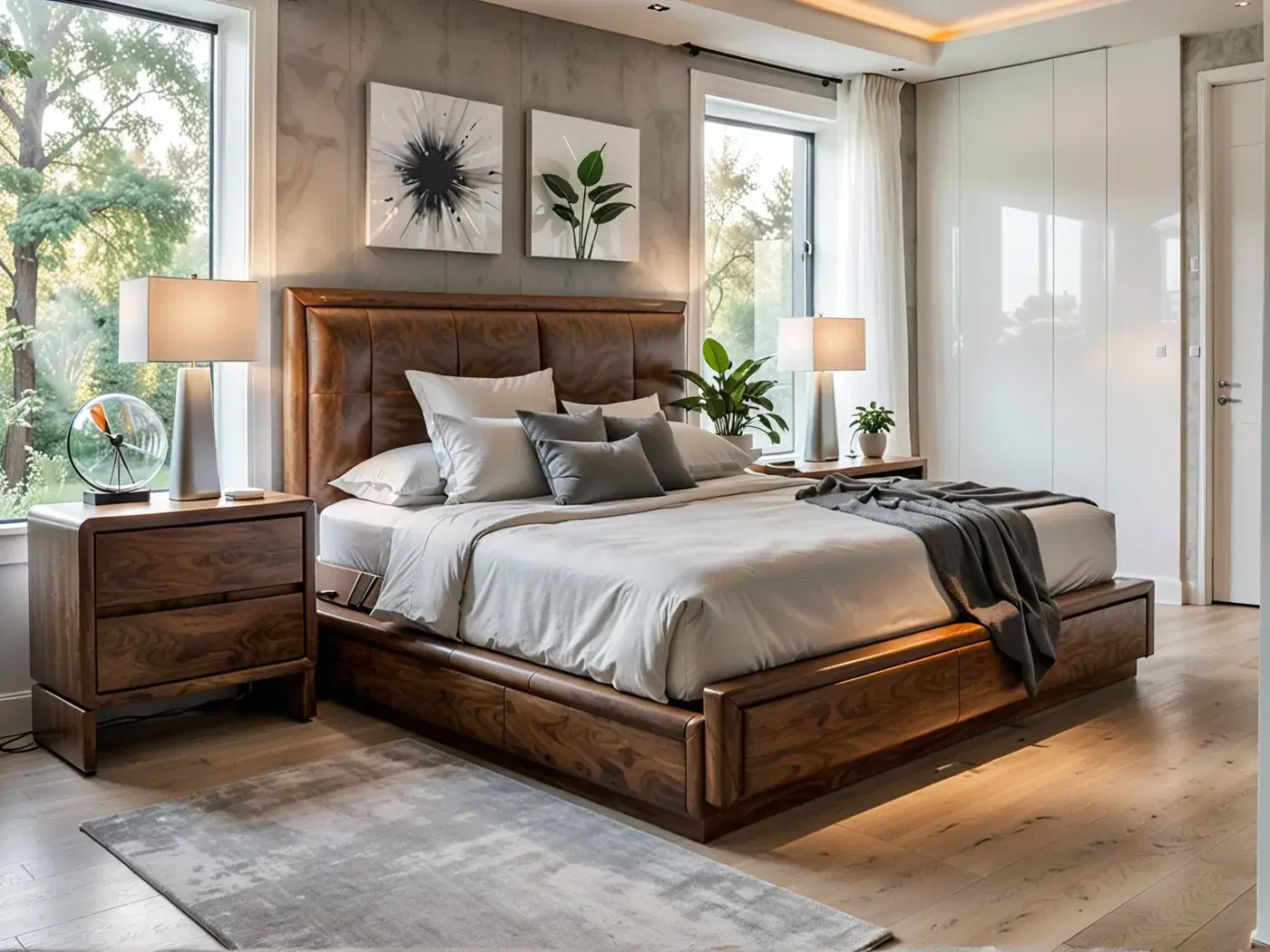
A good AI interior design prompt states your constraints before your wishes: room type and size, what stays, then style, materials, colors and lighting — in that order. "Make my living room cozy" returns a generic render of someone else's living room. "3.5 × 4 m north-facing living room, keep the grey sofa, Scandinavian style, light oak floor, warm white walls, linen curtains" returns something you can actually act on. This guide gives you the formula, 10 prompts you can copy as-is, and the five mistakes behind almost every disappointing render.
The formula: constraints first, wishes second
Most people write prompts backwards — they describe the dream and forget the room. The tool then invents a room that doesn't exist: furniture that won't fit through your door, windows you don't have, light from nowhere. Flip the order. Lock down reality first, then describe the look you want on top of it.
The 6 parts of a prompt that works
- Room + size: "small 3 × 3.5 m bedroom", "open-plan kitchen-living room" — this anchors proportions.
- Light situation: "north-facing, one window", "bright with two large windows" — light changes every color decision.
- What stays: "keep the existing sofa and wood floor" — the single most-skipped part, and the one that makes results realistic.
- Style, named precisely: "Scandinavian", "japandi", "mid-century modern" — one style, not three.
- Materials + colors: "light oak, off-white walls, sage green accents, linen textiles" — 2-3 materials, 2-3 colors, no more.
- Mood or lighting to render: "soft evening light, warm lamps" — this controls the atmosphere of the image itself.
Weak prompt vs strong prompt, side by side
Same room, same tool, two very different results.
Make my bedroom look modern and cozy with nice colors.
— Weak prompt — no size, no constraints, three vague adjectives
Small 3 × 3.5 m bedroom, one window on the left, keep the bed position and the parquet floor. Japandi style: low walnut bed, off-white walls, one sage green accent wall behind the bed, linen bedding, paper lantern pendant, warm evening light.
— Strong prompt — the room is real, the wishes are specific
The weak prompt forces the tool to guess everything, so it falls back on the most average "modern cozy bedroom" in its training data. The strong prompt leaves it only one job: applying a precise look to your actual room. That is also why photo-based tools like Styly outperform text-only image generators for real projects — uploading a photo of your room hard-codes the constraints (dimensions, windows, layout) so your prompt only needs to describe the style.
10 copy-paste prompts that work
Swap the dimensions, colors and materials for your own. Each follows the constraints-first formula.
Living rooms & kitchens
- "4 × 5 m living room, south-facing, keep the sofa and TV wall. Warm minimalist style: oatmeal textiles, travertine coffee table, off-white walls, one large olive tree, brass floor lamp, soft afternoon light."
- "Open-plan kitchen-living room, keep the kitchen island. Modern farmhouse: shaker cabinets in sage green, butcher-block counters, white walls, black hardware, woven pendant lights."
- "Small 3 × 4 m living room, one window, rental — no wall changes. Mid-century modern: walnut sideboard, mustard armchair, cream rug, warm white lighting."
- "Narrow living room with low ceiling, keep the fireplace. Scandinavian: light oak floor, white walls, pale grey sofa, sheepskin throw, paper pendant, bright daylight."
- "5 × 6 m living-dining room, keep the dining table. Japandi: low profile furniture, walnut and oak mix, off-white walls, linen curtains, one ikebana arrangement, diffused morning light."
Bedrooms & small spaces
- "3 × 3.5 m bedroom, north-facing, keep the bed position. Cocooning style: bouclé headboard, warm beige walls, layered linen bedding, two wall sconces, dim warm light."
- "Studio apartment 25 m², keep the kitchenette. Multifunctional layout: sofa bed, foldable desk, vertical shelving, light colors to enlarge the space, mirrors opposite the window."
- "Kids bedroom 3 × 3 m, keep the window wall free. Montessori style: floor bed, low open shelves, soft pastel palette, washable rug, warm night light."
- "Home office in a 2.5 × 3 m spare room. Calm and focused: white oak desk facing the window, sage green wall, closed storage, linen curtain, warm task lighting."
- "Small 2 × 2.5 m bathroom, keep the plumbing layout. Spa style: zellige tiles in soft green, walnut vanity, black fixtures, large round mirror, warm indirect lighting."
The 5 mistakes that ruin most renders
1. No dimensions
Without a size, the tool renders a showroom — usually twice as big as your actual room. Every proportion decision downstream is then wrong.
2. Mixing three styles
"Modern boho industrial" produces mush. Pick one style; add a second only as a named accent ("Scandinavian with one rattan boho accent").
3. Forgetting what stays
If you're keeping the sofa, floor or kitchen, say so. Otherwise you get a beautiful render you'd have to gut your home to reproduce.
4. Vague adjectives instead of nouns
"Cozy", "nice" and "aesthetic" mean nothing to a model. "Linen", "walnut", "sage green" and "warm white lamps" do — name materials and colors, not feelings.
5. Rewriting the whole prompt each try
If a render is 80% right, change one variable — the wall color, the rug, the lighting — and regenerate. Rewriting everything throws away what already worked.
Iterate like a designer: one variable at a time
Treat your first render as a draft, not a verdict. Keep the prompt, change exactly one element per generation — wall color, then textiles, then lighting — and compare. Three focused iterations beat ten rewritten prompts, because you can see what each change actually did. This is also the fastest way to build a shortlist you can show a partner, landlord or contractor.
Test your prompt on a photo of your real room
Upload one photo, describe the style, and get a photorealistic render of your own room — not a showroom — in about 10 seconds. Free, no login.
Try it free on your room →AI interior design prompts — FAQ
What makes a good AI interior design prompt?
State constraints before wishes: room type and size, light situation, what must stay, then one named style, 2-3 materials, 2-3 colors and the lighting mood. Prompts that skip the constraints produce generic showroom renders that don't match your real room.
Why do my AI room designs look nothing like my actual room?
Almost always because the prompt gave no dimensions and didn't say what stays. Text-only generators then invent a room. The fix is either adding those constraints to the prompt, or using a photo-based tool where you upload a picture of your room so the layout is locked in automatically.
How long should an interior design prompt be?
Two to four sentences is the sweet spot — roughly 30 to 60 words. Long enough to cover room, constraints, style, materials and lighting; short enough that no instruction gets diluted. Past ~80 words, extra detail tends to get ignored.
Should I mention my budget in the prompt?
For image generation, budget barely changes the render — materials do, so name affordable materials instead ("IKEA-style light oak", "cotton rug"). Budget matters much more when asking a text assistant like ChatGPT or Claude for a shopping list or plan.
What's the best free way to test these prompts?
Styly AI lets you upload a photo of your room and apply a style prompt with no login, so you can test the formula on your real space in seconds. For text-only ideation (briefs, palettes, shopping lists), ChatGPT and Claude are free to start too.